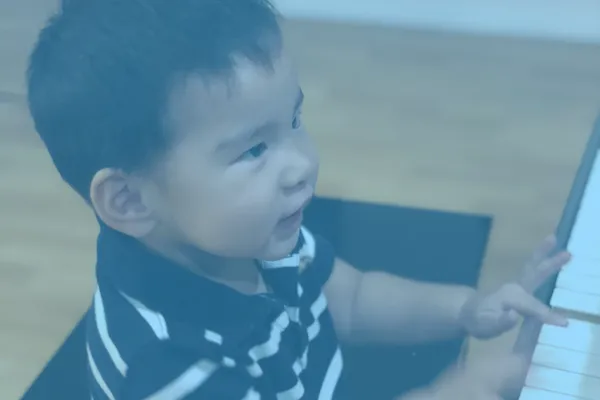
What's the Best Age to Start Piano Lessons? Why We Welcome Students from Age Three!

If you're searching for the best age to start piano lessons, you've probably come across a dozen different answers. Some say wait until age six. Others swear by starting at eight. And then there's your neighbor who insists their kid was "just too young" at five.
Here's the truth: there's no magic number. But at our studio, we welcome students starting at age three, and we've seen incredible results.
Let's bust some myths, explore the benefits of early music education, and help you figure out when your child is ready to tickle the ivories.
The "Perfect Age" Myth

You've heard it before: "Wait until they're six or seven." And yes, research does suggest that children between 6-9 years old often have developed fine motor skills, focus capacity, and cognitive readiness for traditional piano instruction.
But here's what that advice misses: not all piano lessons are created equal.
Traditional lessons designed for older children don't work for three-year-olds. Obviously. But age-appropriate piano classes for young children? That's a completely different story.
When lessons are designed specifically for little learners: with shorter sessions, playful activities, and developmentally appropriate goals: young children thrive. They absorb music like sponges absorb water.
Why We Start Piano Lessons at Age Three
At our NYC piano lessons studio, we've built programs specifically for our youngest musicians. Here's why starting at three works:
Early Brain Development
Between ages 2-7, children's brains are in a critical period for learning. Neural connections form rapidly. Introducing music during this window creates pathways that benefit everything from language development to mathematical thinking.
Piano isn't just about playing songs. It's about building brains.
Building a Musical Foundation
Three-year-olds aren't learning Beethoven sonatas. They're learning:
Rhythm through clapping and movement
Basic note recognition through games
Hand coordination through simple exercises
A love for music that lasts a lifetime
This foundation makes formal instruction at age six or seven dramatically more effective. Kids who start young often surpass peers who waited.
Creating Positive Associations
When children start piano lessons in a fun, pressure-free environment, they develop a positive relationship with music. No stress. No tears. Just joy.
That positive association? It's the secret ingredient to long-term success.

Common Misconceptions About Early Piano Lessons
Let's tackle some myths head-on. If you've been hesitant about piano lessons for kids under six, you've probably believed at least one of these.
Myth #1: "Their Hands Are Too Small"
Young children do have small hands. But they're not playing octave stretches. Age-appropriate lessons work with what they have. Simple melodies, individual finger exercises, and activities that strengthen coordination without strain.
Myth #2: "They Can't Focus Long Enough"
A three-year-old sitting still for 30 minutes? Unlikely. That's why our lessons for young children are shorter and packed with variety. Movement, games, singing, and playing all mix together. Attention spans grow with practice.
Myth #3: "They Won't Remember Anything"
Will your three-year-old remember specific songs five years from now? Maybe not. But they'll retain the skills, the ear training, and the comfort with the instrument. Early exposure creates muscle memory and musical intuition that sticks.
Myth #4: "It's a Waste of Money"
Research consistently shows that early music education improves academic performance, social skills, and emotional regulation. Piano lessons aren't just an extracurricular activity. They're an investment in your child's overall development.
For more myth-busting, check out our post on debunking music lesson myths.
Signs Your Child Might Be Ready
Age is just one factor. Readiness matters more. Here are signs your little one might be ready for piano classes in NYC:
They show interest in music. Do they gravitate toward the piano at grandma's house? Pretend to play keyboard on the coffee table? Interest is the strongest predictor of success.
They can follow simple instructions. "Put your hand here" or "press this key" requires basic comprehension. Most three-year-olds can handle this.
They can sit for short periods. We're not talking 30 minutes. Even 10-15 minutes of focused activity suggests readiness.
They have basic finger independence. Can they wiggle individual fingers? Point with one finger? These simple skills translate to piano playing.
Not sure if your child is ready? Take our readiness assessment or reach out to our team.

What About Starting Later?
Here's the good news: it's never too late to start piano lessons.
Children who begin at 8, 10, or even 12 can absolutely become accomplished pianists. With consistent practice and quality instruction, they catch up quickly. Older children often progress faster through initial stages because of their developed cognitive abilities.
The "best" age is the age when your child shows interest and readiness. Period.
We've seen seven-year-olds who weren't ready and four-year-olds who were. Every child is different.
Benefits of Piano Lessons for Kids at Any Age
Whether your child starts at three or thirteen, piano lessons deliver powerful benefits:
Improved academic performance. Studies link music education to better reading comprehension, math skills, and overall academic achievement.
Enhanced motor skills. Playing piano requires coordination between both hands, developing fine motor control and dexterity.
Better emotional regulation. Music provides an outlet for expression and teaches patience through practice.
Increased confidence. Mastering songs and performing builds self-esteem that transfers to other areas of life.
Lifelong enjoyment. Piano is a skill that brings joy for decades. Your child's future self will thank you.
Curious about raising young musicians? Read our thoughts on little perfectionists and piano kids.
What to Expect from Early Piano Lessons
If you enroll your three or four-year-old in piano lessons in New York City, here's what quality instruction looks like:
Short, engaging sessions. Typically 15-20 minutes for the youngest students, building up as attention spans grow.
Play-based learning. Games, songs, and movement keep kids engaged while teaching fundamental concepts.
Parent involvement. Many programs for young children include parents in lessons, so you can reinforce learning at home.
Gradual progression. No rushing. No pressure. Just steady, joyful progress at your child's pace.
Patient, trained instructors. Teaching tiny humans requires specialized skills. Our instructors are trained to work with young learners.

Ready to Get Started?
Stop overthinking the "perfect" age. If your child shows interest in music, that's your sign.
Our piano classes in NYC welcome students starting at age three. We've designed our programs to meet young learners exactly where they are: with patience, play, and proven methods.
Here's what to do next:
Contact us with questions about our programs
Check out our locations to find a studio near you
Review our rates to find a plan that fits your family
Schedule a trial lesson to see if it's the right fit
The best age to start piano lessons? It's whenever your child is ready: and they might be more ready than you think.
