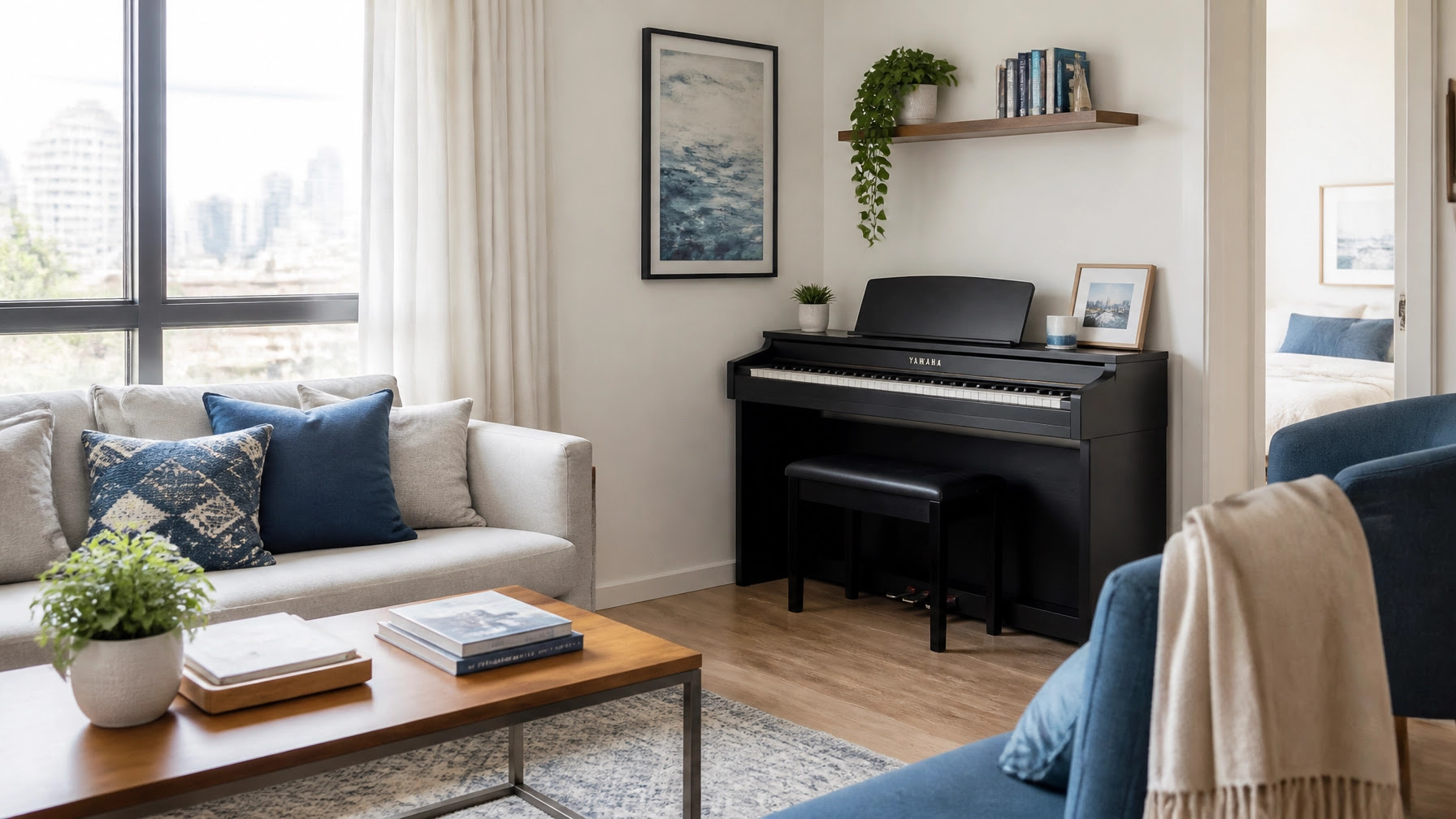
Small Space, Big Sound: How to Practice Piano When You Live in an Apartment
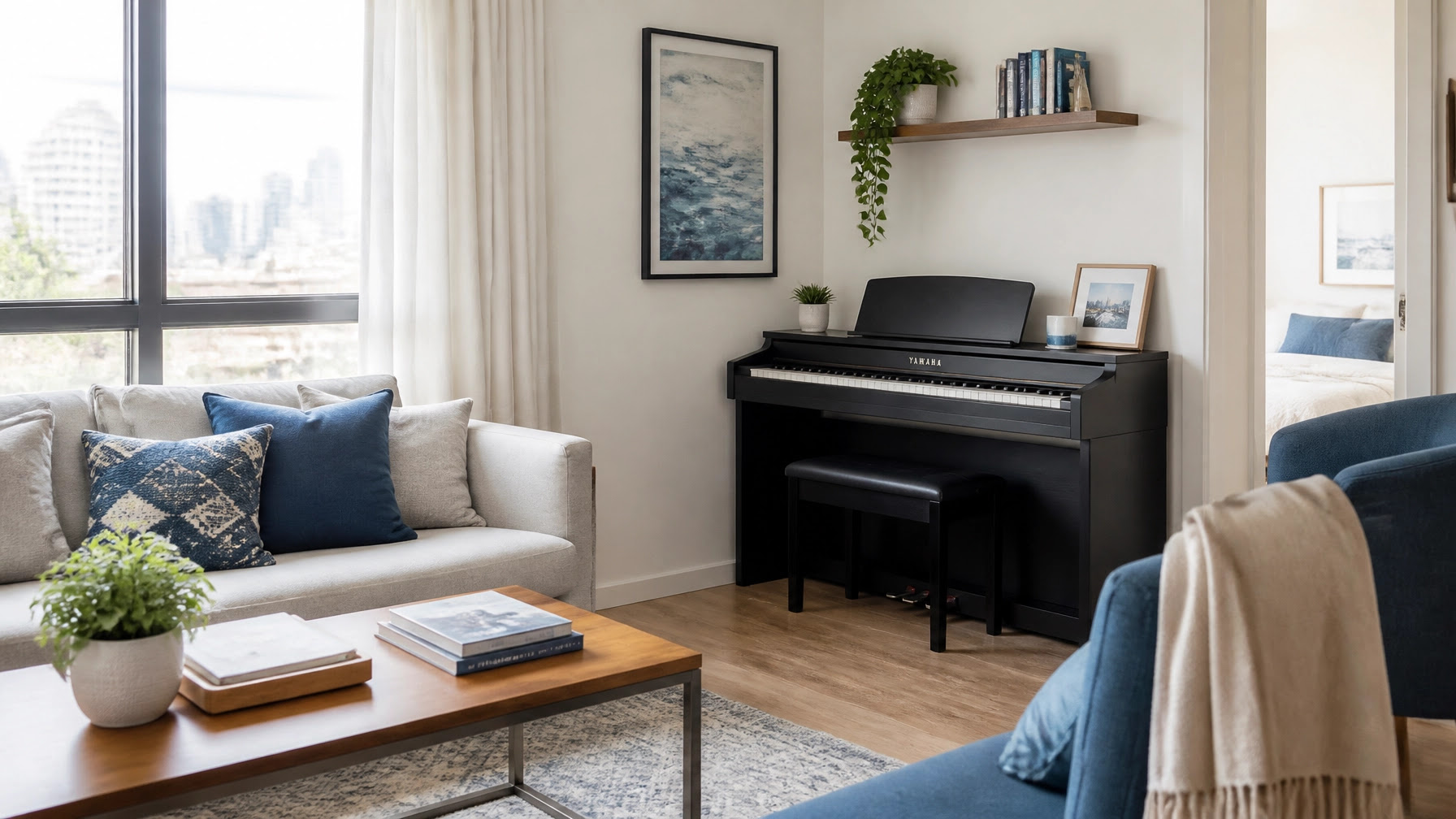
Many aspiring musicians in the city believe a common myth: you need a massive living room and a six-foot grand piano to truly learn the instrument. When you're living in a cozy studio or a shared apartment, the idea of adding a piano can feel like trying to fit a square peg in a very small, very expensive round hole.
But here is the reality: your square footage doesn't dictate your musical potential. Whether you are living in a walk-up in NYC or a modern condo in Walnut, CA, you can create a high-quality practice environment without sacrificing your entire living area or your relationship with your neighbors.
At Natalia Huang Piano Studio, we specialize in making music fit your life: not the other way around. Because we offer exclusively in-home lessons in NYC and welcome students to our studio locations in California, including Yorba Linda, Hacienda Heights, and Walnut, we have seen every possible room configuration. We know exactly how to turn a small corner into a world-class practice station.
Is Your Apartment Too Small for a Piano?
The short answer is no. If you have enough room for a desk or a small bookshelf, you have enough room for a piano. The key is choosing the right instrument for your specific footprint.
For many city dwellers, a high-quality digital piano is the ultimate space-saver. Unlike the heavy acoustic pianos of the past, modern digital instruments are slim, lightweight, and often designed with a minimalist aesthetic that complements modern decor. An 88-key weighted digital piano typically measures about 52 to 55 inches in length and only about 12 inches in depth.
If you have your heart set on an acoustic sound, consider an upright piano. While they are heavier, their vertical design means they hug the wall and take up surprisingly little floor space. In homes across Yorba Linda or Hacienda Heights, where you might have a bit more breathing room, an upright can become a beautiful focal point of a room without dominating the entire floor plan.
Think about your vertical space as well. Can you move a bookshelf to make room for a keyboard stand? Can you use a slim-profile bench that tucks neatly under the keys when you aren't playing? When you start looking at your floor plan with a "musical eye," you’ll be surprised at the pockets of space you find.

Can You Practice Without Your Neighbors Complaining?
Noise is the number one concern for apartment dwellers. Nobody wants to be "that neighbor" who practices scales at 7:00 AM or late into the night. Fortunately, modern technology has completely solved the noise dilemma.
If you opt for a digital piano, the solution is simple: headphones. Investing in a high-quality pair of over-ear headphones allows you to hear every nuance of your playing: from the softest pianissimo to the boldest fortissimo: while the rest of your apartment remains silent. This is a game-changer for adults who want to practice as a "post-work reset" after a long day in the office or kids who need to get their practice in before school.
But what if you already own an acoustic piano? You aren't stuck. You can significantly reduce the sound transmission to your neighbors with a few simple steps:
Decouple the instrument from the floor: Pianos vibrate, and those vibrations travel through the floor to the unit below. Placing your piano on a thick, plush area rug with a high-quality rug pad can absorb a significant amount of that energy.
Use caster cups: These small discs sit under the piano's wheels and are often lined with felt or rubber to further isolate the sound.
Mind the walls: If you live in a building with shared walls, try to place your piano against an interior wall that doesn't border your neighbor’s bedroom. If that’s not possible, leaving a few inches of "air gap" between the piano and the wall can help.
Invest in a Silent System: For the serious acoustic enthusiast, you can have a "silent system" retrofitted to your upright or grand piano. This allows you to slide a lever that stops the hammers from hitting the strings, while sensors under the keys trigger a digital sound in your headphones.
Why Is the In-Home Experience Better for City Dwellers?
Living in a busy area like NYC or Greenwich means your time is your most valuable asset. The last thing you want to do after a long day is commute to a physical studio location. This is why our in-home lesson model is so effective.
When your teacher comes to you, you are learning on the very instrument you will be practicing on every day. There is no "translation" period where you have to get used to the weight of the keys in a studio vs. your home keyboard. Your instructor can also help you optimize your setup: adjusting your bench height, lighting, and posture to fit your specific home environment.
Whether you are learning piano in your own living room in NYC or visiting one of our California studio locations from Yorba Linda, Hacienda Heights, or Walnut, the process feels simple and approachable. It makes piano feel like a natural part of your routine, rather than one more thing to squeeze into your day.

How Do You Optimize a Small Practice Space?
Creating a dedicated "music zone" helps with focus and ensures you actually sit down to play. Even in a small space, you can make your practice area feel professional and inviting:
Prioritize Lighting: Good lighting is essential for reading sheet music and preventing eye strain. A slim LED floor lamp or a clip-on piano light can provide focused brightness without taking up desk space.
Organize Your Materials: Use a small basket or a wall-mounted file holder to keep your music books and notebooks organized. A cluttered space leads to a cluttered mind.
Ensure Ergonomics: Even if you are using a portable keyboard, don't just put it on a desk. Use a proper, adjustable X-stand or Z-stand and a sturdy piano bench. Maintaining the correct height is crucial for developing good technique and avoiding injury.
Add a Touch of Inspiration: A small plant or a piece of art near your piano can make the space feel like a sanctuary. When your practice corner looks beautiful, you’ll be much more likely to use it.
What Happens During Your First Lesson?
Ready to stop worrying about your floor plan and start making music? The process is straightforward. When you contact us today, we match you with an instructor who fits your goals and your location: be it in the heart of the city or the suburbs of California.
During your first lesson, the experience depends on your location. In NYC, your teacher comes to your home and can help evaluate your setup and piano placement. In California, students from Yorba Linda, Hacienda Heights, and Walnut are welcome at our studio locations. We work with students of all levels, from three-year-olds taking their first musical steps to adults looking for a creative outlet.

Don't let a small apartment keep you from the joy of playing the piano. With the right equipment and a bit of smart organization, your home can become the perfect conservatory.
Contact us today to schedule your first lesson:
New York City: In-home lessons throughout the city
Connecticut: Serving Greenwich and surrounding areas
California: Studio lessons for students in Yorba Linda, Hacienda Heights, and Walnut
Visit our Rates page to learn more about our lesson packages, or Join us to get started immediately.

